
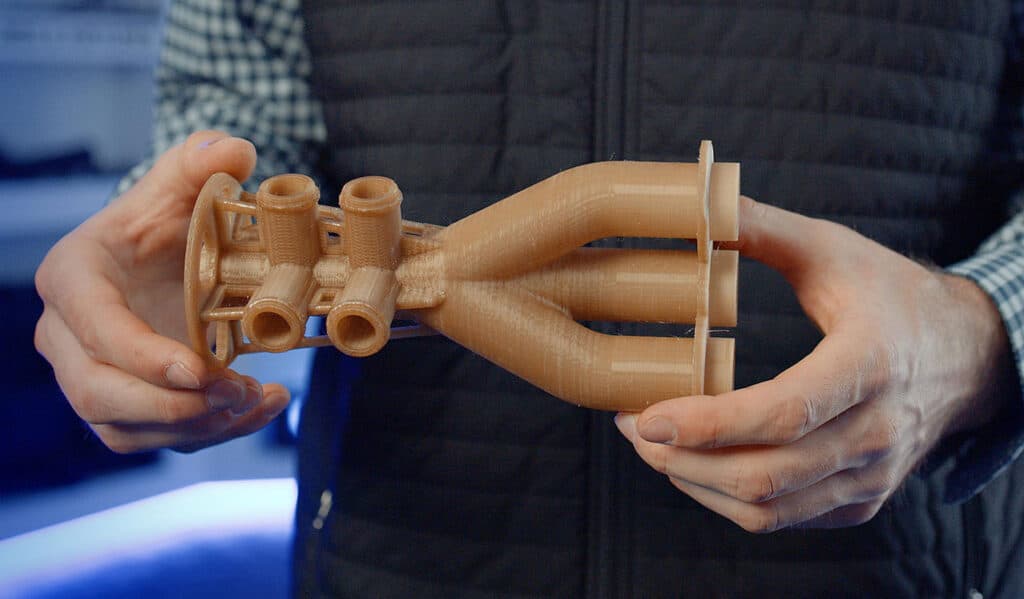
When it comes to defence procurement and research, scale models and accuracy in defence supplier deliverables are not optional luxuries — they are mission-critical requirements. Whether a DRDO team is validating the aerodynamic profile of an unmanned aerial vehicle, or a defence OEM is presenting a weapons platform concept to the Ministry of Defence, a precisely fabricated scale model can accelerate approvals, expose design flaws early, and reduce the cost of full-scale prototyping by orders of magnitude. India's growing indigenisation push under the Defence Acquisition Procedure (DAP) 2020 and the Atmanirbhar Bharat initiative has placed enormous pressure on domestic suppliers to deliver high-fidelity models faster and more affordably than ever before. 3D printing — specifically SLA resin, FDM, and metal additive manufacturing — is now the technology that makes this possible.
Why Scale Models Matter for Defence Supplier Accuracy and Procurement
In the defence supply chain, the gap between a CAD file and a physical, testable prototype can cost months and millions of rupees. Traditional model-making using CNC machining or hand-fabrication is time-intensive, operator-dependent, and difficult to reproduce across multiple units. For defence suppliers presenting to DRDO, HAL, BEL, or the Indian Army, scale models and accuracy in defence supplier submissions directly influence whether a design moves forward to the next evaluation stage.
Physical scale models serve several distinct functions in the defence context. They allow wind tunnel and hydrodynamic testing at reduced cost, they communicate spatial relationships and assembly logic that no 2D drawing can convey, and they provide a tangible artefact for committee reviews where stakeholders may not all be technically trained. When a model is dimensionally inaccurate — even by a fraction of a millimetre at scale — the extrapolated error at full size can be structurally or aerodynamically significant. This is why defence procurement committees increasingly specify tolerance requirements down to ±0.1 mm for certain categories of presentation and functional models.
Aerodynamic validation models: UAVs, missiles, and aircraft require surface accuracy within tight tolerance bands for meaningful wind tunnel data.
Structural concept models: Armoured vehicle hulls, naval vessel superstructures, and shelter systems use scale models to validate assembly sequences.
Training and simulation aids: Scaled replicas of equipment used in field training, maintenance simulation, and operator familiarisation programmes.
Presentation and tender models: High-detail display models submitted as part of defence RFP responses and DPP approval processes.
Functional sub-assembly prototypes: Moving parts, hinge mechanisms, and locking systems tested at scale before committing to full-size tooling.
How 3D Printing Delivers Scale Models with Defence-Grade Accuracy
Modern additive manufacturing technologies have matured to the point where they meet — and in some cases exceed — the dimensional accuracy standards required by Indian defence suppliers. The key is selecting the right process for the right application, and this is where a technically capable manufacturing partner makes a decisive difference.
SLA Resin Printing for High-Fidelity Surface Models
Stereolithography (SLA) resin printing produces scale models with layer resolutions as fine as 25–50 microns. For defence suppliers needing accurate surface geometry on aircraft fairings, radar dome profiles, or naval hull forms, SLA delivers smooth, paint-ready surfaces that faithfully reproduce CAD geometry. The dimensional accuracy of ±0.1 to ±0.2 mm makes SLA the preferred process for presentation-grade defence scale models that need to impress evaluation committees and pass dimensional inspection.
FDM for Structural and Functional Scale Prototypes
Fused Deposition Modelling (FDM) using engineering-grade materials such as PETG, ABS, ASA, or Nylon offers robust, cost-effective scale models for structural concept validation. For DRDO teams running iterative design cycles on vehicle systems or portable military infrastructure, FDM provides a rapid, affordable path to physical prototypes — often within 24 to 48 hours of a revised CAD file. Accuracy typically ranges from ±0.2 to ±0.5 mm, suitable for assembly-fit testing and training aids.
Metal 3D Printing for Critical Defence Components
For defence suppliers requiring functional metal scale models or actual prototype components — titanium brackets, stainless steel fittings, aluminium structural nodes — Direct Metal Laser Sintering (DMLS) produces parts with mechanical properties close to wrought material. This is critical for defence applications where a scale model must also survive handling, environmental testing, or demonstrate proof of concept under load.
Key Accuracy Standards Defence Suppliers Must Meet for Scale Models
Understanding the accuracy benchmarks that matter to DRDO and Indian defence procurement bodies helps suppliers specify their manufacturing requirements correctly and avoid costly rework cycles. Scale models and accuracy in defence supplier contracts are increasingly governed by documented standards rather than informal expectations.
Indian defence procurement increasingly references MIL-STD and equivalent Bureau of Indian Standards (BIS) specifications when defining acceptable tolerances for prototype and model submissions. For aerodynamic test models, surface roughness Ra values below 1.6 µm are commonly specified after post-processing. Dimensional compliance is typically verified using coordinate measuring machines (CMM) or structured light 3D scanning, with a full inspection report submitted alongside the model.
A capable defence supplier working with additive manufacturing should be able to provide dimensional inspection reports, material certifications, and process traceability documentation. These are not bureaucratic formalities — they are the evidence base that allows DRDO evaluation teams to trust the data generated from physical testing of scale models. Suppliers who cannot provide this documentation are increasingly disqualified from serious defence tenders, regardless of the apparent quality of the model itself.
Post-processing also plays a significant role in final accuracy. Sanding, priming, painting, and assembly of multi-part scale models all introduce potential dimensional variation. A disciplined quality workflow — from print parameter optimisation through to final inspection — is what separates a professional defence-grade scale model supplier from a general-purpose 3D printing bureau.
Choosing the Right 3D Printing Partner for Defence Scale Model Projects in India
For DRDO scientists, defence OEM engineers, and procurement managers across India, the selection of a scale model manufacturing partner is a strategic decision. The right partner must combine technical capability across multiple additive processes, strict quality documentation practices, and the ability to handle ITAR-adjacent and sensitive design data with appropriate confidentiality protocols.
India's domestic additive manufacturing ecosystem has grown substantially over the past five years. Ahmedabad in particular has emerged as a hub for precision manufacturing services, with suppliers capable of handling complex, multi-material scale model projects for the aerospace and defence sector. When evaluating a supplier, defence teams should assess the following criteria: dimensional accuracy guarantees per process, available post-processing capabilities, quality management certifications (ISO 9001 at minimum), experience with defence or aerospace clients, and turnaround time for urgent prototype requirements.
Scale models and accuracy in defence supplier selection cannot be reduced to price alone. A model that costs 20% less but arrives out of tolerance, without inspection documentation, or three weeks late provides no value to a defence programme on a critical milestone schedule. Total cost of quality — including rework, re-submission, and schedule impact — almost always favours the technically superior supplier.
Transparency in material selection is equally important. Defence suppliers should be able to specify and receive confirmation of the exact resin, filament, or metal powder used, along with the mechanical property data sheet for that material batch. This enables accurate correlation between scale model test data and full-size performance predictions.
At Layer X, we work with defence suppliers, aerospace firms, and research institutions across India to deliver precision scale models that meet the accuracy, documentation, and quality standards demanded by DRDO and Indian defence procurement. Our capabilities span SLA resin, FDM, and DMLS metal printing, supported by CMM inspection and comprehensive quality reporting. If your team needs scale models and accuracy in defence supplier submissions that hold up to scrutiny, we are ready to support your next project. Request a quote from Layer X today and let our engineering team help you move from CAD to compliant physical prototype — on time and on specification.